BSE Downgraded: Is India's Options Gold Rush Running Out of Fuel?
Jefferies has cut BSE to Underperform as options turnover slides under a wall of new SEBI and RBI rules. What the downgrade means for India's exchange boom.
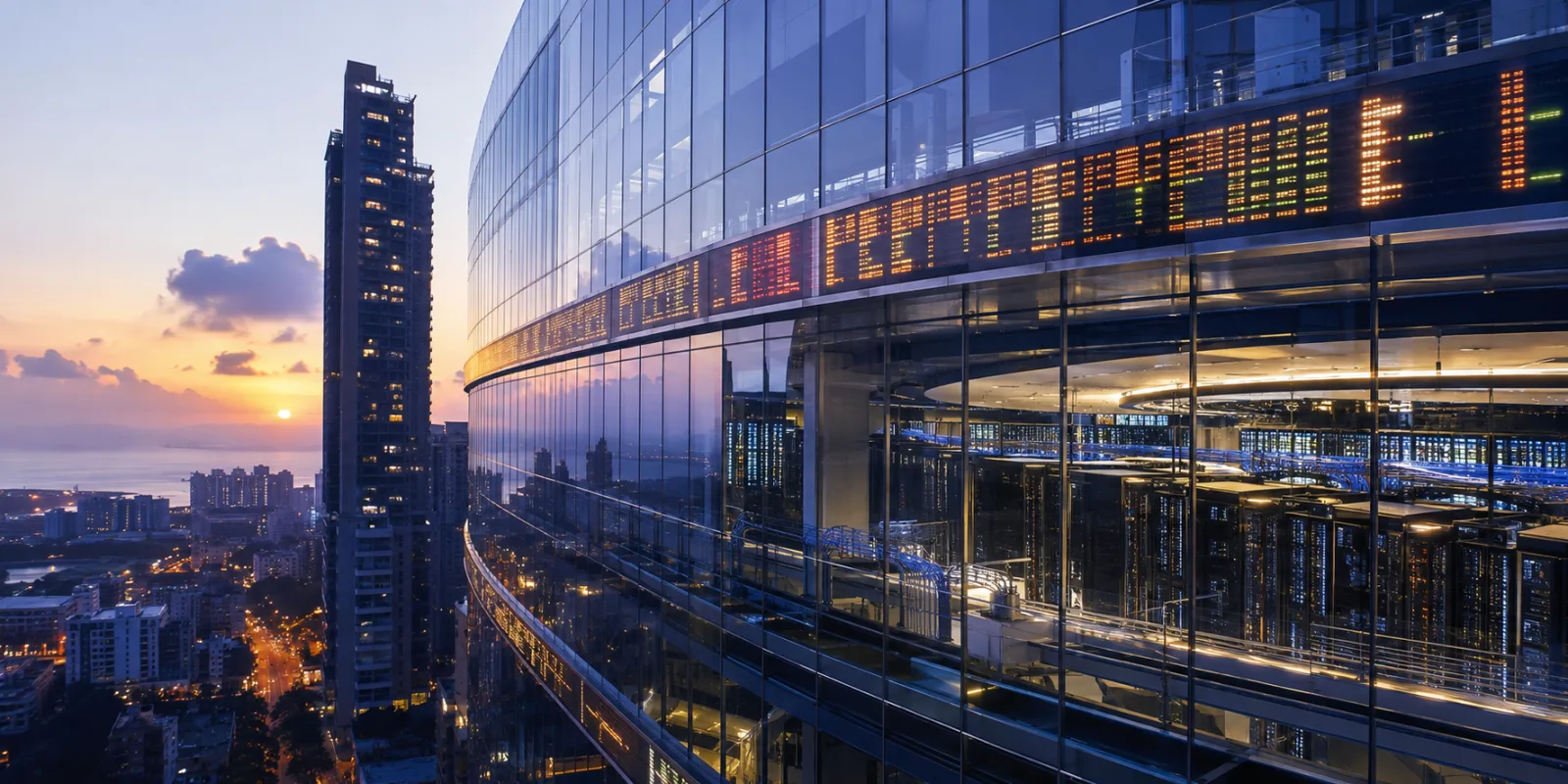
For most of the past three years, the surest way to profit from India's mania for options was not to trade options at all. It was the ownership of the exchange that took a toll on every contract. Shares of BSE Ltd, operator of Asia's oldest bourse, climbed so far and so fast that the company earned a seat in the Nifty 50, the country's headline index, displacing the software exporter Wipro from 30 September. On 17 August, that trade met its first serious sceptic. Jefferies, the global brokerage, cut BSE to "underperform", its lowest rating, warning that the regulatory tide now turning against retail speculation could erode the very volumes that made the stock a star (Investing.com).
The call matters beyond a single ticker. BSE has become a proxy for one of the loudest arguments in Indian finance: whether the country's world-beating derivatives boom is a durable feature of a maturing market, or a bubble that regulators are deliberately deflating. A downgrade aimed squarely at the engine of BSE's profits is, in effect, a bet on how that argument ends.
What happened#
On 17 August 2026 Jefferies downgraded BSE from "hold" to "underperform" and lowered its price target by 16 per cent, to ₹2,940 from ₹3,520 (Investing.com). The stock fell about 2.8 per cent on the day, to ₹3,351, lagging a Nifty 50 that was down only fractionally (Investing.com). Coming days after brokers had been debating whether BSE still deserved a "buy" at all (Business Today), the move crystallised a growing unease on the sell side.
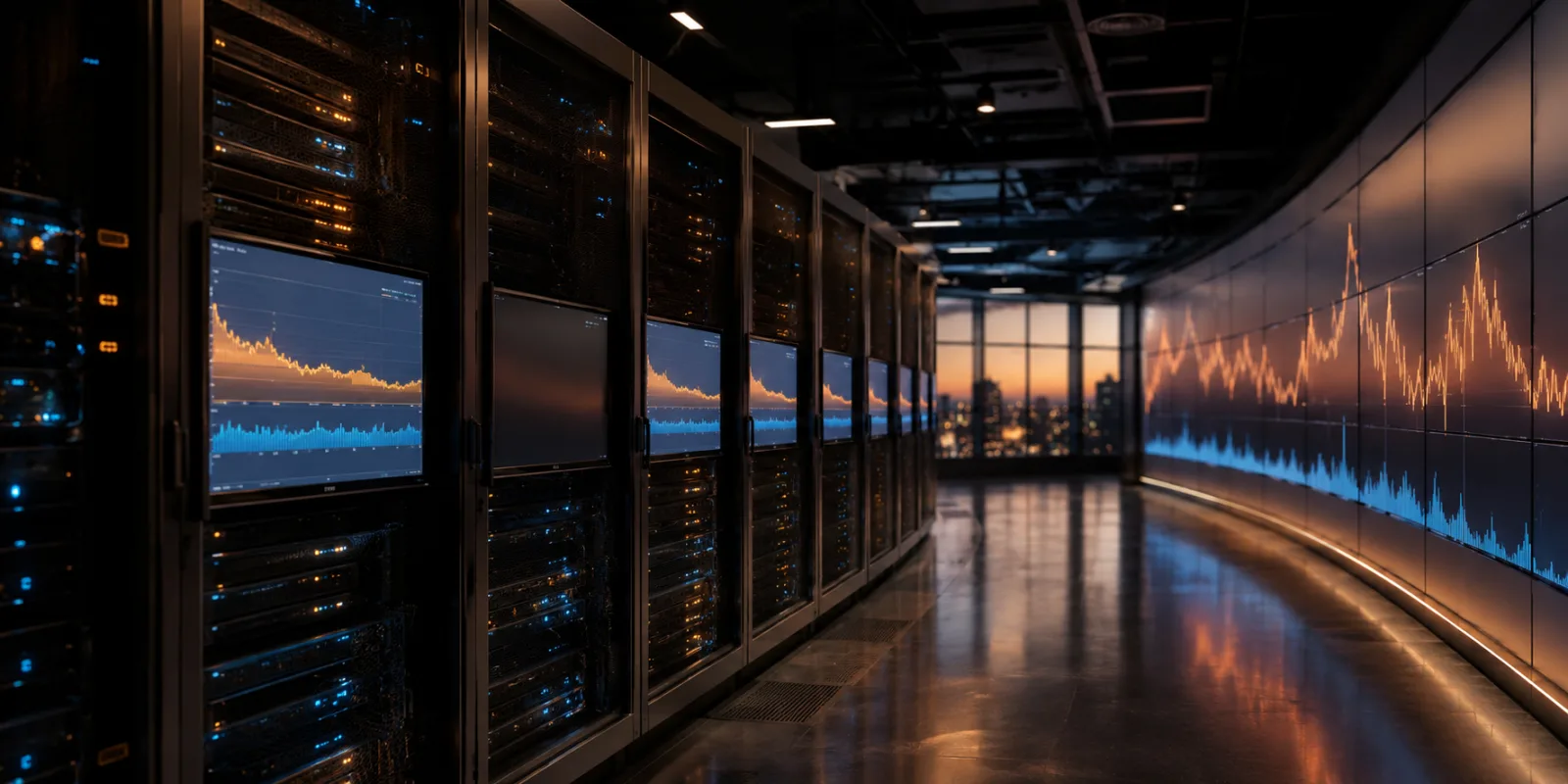
The bear case rests on one number: options turnover. BSE's average daily options premium turnover fell 12 per cent in the first half of August from July's level, and combined options turnover across BSE and NSE dropped 12 and 14 per cent respectively over the same window (Investing.com). Jefferies traced the softness to three regulatory changes pressing on domestic proprietary traders, the professional firms that, on its estimate, generate roughly half of all equity-options notional turnover. Those three are a higher securities transaction tax, tighter Reserve Bank of India rules on the bank guarantees such desks post as collateral, and the newly launched Closing Auction Session (Investing.com). The brokerage cut its FY2027 to FY2029 earnings-per-share estimates by 5 to 12 per cent, and flagged a further 2 to 5 per cent downside if BSE's market-share gains stall in the two years after that (Investing.com).
The engine under the bonnet#
To see why turnover is everything, look at how a modern exchange earns its keep. BSE makes money largely by charging a small fee on the value of trades it matches, and options are the most lucrative of the lot. In the quarter to June 2026 the company reported net profit up 62 per cent to ₹873 crore and total income up 63 per cent to ₹1,707 crore, powered by a roughly 80 per cent jump in transaction charges (Angel One; Business Standard). When contract volumes rise, almost all of the extra fee income drops to the bottom line, because the cost of running the matching engine barely moves. That operating leverage is what re-rated the shares. It works just as fiercely in reverse.
The relevant gauge is options premium turnover, not the headline notional. An option's notional value is the full size of the underlying it controls; its premium is the far smaller sum actually paid for the contract. Exchanges levy their fee on premium, so premium turnover, averaged over a day and known as average daily turnover, or ADTO, is the number that maps to revenue. It is that figure, not the eye-catching notional, that has started to slip.
Three policy changes sit behind the slide. First, the securities transaction tax, a levy collected on each trade: the government raised the STT on the sale of options from 0.0625 to 0.1 per cent of the premium with effect from 1 October 2024, explicitly to cool the retail frenzy (Business Standard; ICICI Direct). For a high-frequency desk trading thousands of contracts a day, that tax is a direct hit to the thin margins on which it operates. Second, tighter RBI norms on bank guarantees, the collateral brokers and proprietary desks lodge to back their positions, have made it costlier to fund large trading books. Third, and most recent, the Closing Auction Session (CAS), which went live for derivatives-eligible stocks on 3 August 2026, moved India's last 15 minutes of trading from a calculated closing price to a single, auction-determined equilibrium price, ending continuous trading at 3:15 pm. Its debut was, by most accounts, a bumpy one (Outlook Business). Jefferies noted that options turnover on both exchanges fell 20 to 23 per cent in the second week after CAS launched, compared with the first (Investing.com).
None of this arrived out of nowhere. It is the latest instalment of a two-year campaign by the Securities and Exchange Board of India (SEBI) to tame a market where, its own study found, more than 91 per cent of individual derivatives traders lost money, with aggregate net losses of ₹1.06 lakh crore in the year to March 2025, up 41 per cent on the prior year (Business Standard; Moneylife).
Where the tremor travels#
The most direct effect falls on exchange-traded and brokered stocks. BSE is the purest listed bet on Indian options volumes, so it feels any slowdown first and hardest; but the read-through extends to discount brokers whose revenue leans on derivatives activity, and to the market-infrastructure trade more broadly. The timing is pointed, because arch-rival NSE is preparing a long-awaited initial public offering reported at around $3bn (Bloomberg via prior reporting). A cooling in the volumes that both exchanges share will shape how investors price that listing.
There is a knock-on for banking, too. The tighter bank-guarantee regime that squeezes proprietary desks also trims the fee business for the banks that issue those guarantees. And for the wider equity market, the signal is subtler but real: a large share of index-tracking money now automatically owns BSE, following its Nifty 50 inclusion, so a de-rating of the stock quietly nicks the returns of anyone who "just buys the index".
For fixed income, foreign exchange and commodities, the immediate impact is slight; this is a microstructure story, not a macro one. But it feeds a theme that matters to every asset class: the Indian regulator's willingness to intervene forcefully in market plumbing. That precedent shapes how global allocators assess regulatory risk across the country's financial system.
The mechanics of a toll booth#
Why should an administrative change to the closing routine dent options trading at all? The link runs through the behaviour of the professionals who dominate volumes. Proprietary and high-frequency desks thrive on the certainty and the churn of the final minutes, hedging and unwinding positions into a predictable close. Replacing a formula-based closing price with an auction adds a layer of uncertainty to that ritual and removes some of the continuous end-of-day trading these desks feed on. Layer a higher transaction tax and costlier collateral on top, and the economics of very-high-turnover strategies deteriorate. Fewer of those trades clear, and premium ADTO falls.
The key idea for investors is elasticity, meaning how sensitive trading volume is to trading costs. India's retail and proprietary options activity has proved unusually elastic: nudge costs up through tax, margin or friction, and a chunk of the volume simply disappears rather than migrating elsewhere. That is precisely what SEBI intended, and precisely what makes an exchange whose profits ride on turnover vulnerable. Jefferies leans on this: it models a recovery in the second half of FY2027, but assumes flat market share thereafter, and it is that cautious extrapolation, rather than any single month's data, that drives the earnings cuts (Investing.com).
The bear case and its blind spots#
The downgrade has a coherent spine. BSE's valuation bakes in years of rapid growth, so even a modest trimming of volume assumptions removes a lot of implied value. The regulatory pressures are real, cumulative and, for the most part, permanent. And there is honest uncertainty in Jefferies' own numbers: the consensus it cites assumes BSE's options premium ADTO reaches ₹270bn in FY2027 followed by roughly 20 per cent annual growth, assumptions that could prove generous if the crackdown bites harder (Investing.com).
The blind spots deserve equal billing. A downgrade to "underperform" is a relative-value call, not a verdict on the business; BSE still compounded profit at better than 60 per cent year on year in its most recent quarter (Business Standard). Early-August turnover figures are noisy and seasonal, and one soft fortnight after a market-structure change is thin evidence of a lasting trend. BSE has also spent two years taking share from NSE, and a regulator keen on a genuine two-exchange market may prefer that competition to survive. Sell-side price targets, finally, are opinions calibrated to a horizon; they are not forecasts of where a share must trade. Treat the downgrade as a well-argued hypothesis about volumes, not a settled fact.
Cyclical squeeze or structural reset?#
India has watched derivative booms cool before, but rarely by design. What is unusual now is that the softening is the intended policy outcome, not a market accident. Since late 2024, SEBI has raised contract sizes, limited each exchange to a single weekly expiry, mandated upfront premium collection and staggered expiry days. Those measures helped drive options volumes down by more than half across NSE and BSE during FY2026 (FOW; Zerodha).
Seen against that backdrop, the Jefferies call is less a fresh alarm than a recognition that the campaign is not finished. The honest answer to whether this is cyclical or structural is: probably both. A cyclical rebound is plausible once traders adjust to the auction and the new tax regime, which is why Jefferies pencils in a second-half recovery. But the structural ceiling looks lower than the boom years implied. India is deliberately reshaping the mix of its market away from short-dated retail speculation and towards something steadier. For an exchange that monetises turnover, a healthier market may also be a less profitable one, and reconciling those two facts is the puzzle now sitting in BSE's share price.
Key takeaways#
- A downgrade aimed at the engine. Jefferies cut BSE to "underperform" and its target to ₹2,940, arguing that the options turnover behind the stock's re-rating is weakening (Investing.com).
- Turnover is the whole story. BSE's options premium ADTO fell 12 per cent month-to-date in August, and both exchanges saw a 20 to 23 per cent drop in the second week after the closing auction launched (Investing.com).
- Three regulatory forces, one direction. A higher STT, tighter RBI collateral rules and the new Closing Auction Session all press on the proprietary desks that supply about half of options volume (Investing.com).
- The fundamentals are still strong for now. BSE grew Q1 FY27 net profit 62 per cent to ₹873 crore; the downgrade is about the trajectory of volumes, not the current business (Business Standard).
- A market by design. This slowdown is the intended result of SEBI's two-year campaign to curb retail losses, which topped ₹1 lakh crore in FY25. A lower structural ceiling for volumes is now plausible (Business Standard).
Frequently asked questions#
What does an "underperform" rating actually mean? It is a brokerage's lowest tier, signalling that the analyst expects the stock to lag its benchmark or peers over the coming 12 months. It is a relative call, not a prediction of collapse, and it reflects opinion rather than fact.
Why does BSE care so much about options rather than share trading? Because options generate the bulk of its fee income. Transaction charges, up around 80 per cent year on year last quarter, are levied on the premium value of contracts, and options volumes dwarf cash-market activity, so a change in options turnover moves BSE's revenue far more than a change in stock trading does.
What is the Closing Auction Session and why would it hurt volumes? CAS, live since 3 August 2026, replaced India's calculated closing price with an auction that sets a single equilibrium price, ending continuous trading at 3:15 pm. By changing how the final minutes work, it disrupts end-of-day strategies used by high-frequency desks, which appears to have coincided with a fall in options turnover.
Is this a company-specific problem or an industry one? Both exchanges are affected, and NSE options turnover has also fallen, but BSE is the more exposed listed name because it is the purer play on options volume. NSE, whose IPO is pending, faces the same headwind from a more diversified base.
Does the downgrade mean BSE's profits are falling? No. BSE still reported strong profit growth in the June quarter. Jefferies cut its estimates for future years by 5 to 12 per cent, meaning slower growth than previously assumed, not an outright decline in current earnings.
Why is SEBI trying to shrink such a profitable market? Because the boom came at retail investors' expense. SEBI's study found more than 91 per cent of individual F&O traders lost money in FY25, with combined losses above ₹1 lakh crore.Business Standard). Cooling speculative volumes is a deliberate consumer-protection goal.
Should I read this as advice to buy or sell BSE? No. This article explains a research call and the forces behind it; it is not investment advice. A single brokerage's target is one input among many, and reasonable analysts disagree; other houses still rate the stock positively.
References#
- Investing.com: Jefferies downgrades BSE to Underperform as options risks mount (primary source for the downgrade, target price, turnover figures and earnings cuts)
- Business Standard: BSE Q1 PAT rises 62% YoY (earnings report)
- Angel One: BSE share price in focus after Q1 FY27 earnings: total income up 63.4% YoY (earnings detail, transaction charges)
- Business Standard: Net losses of individual traders in F&O widened in FY25: SEBI study (SEBI retail-loss data)
- Moneylife: ₹1.06 lakh crore lost by individual traders in F&O in FY25 (SEBI retail-loss data)
- The TRADE: SEBI launches new equities closing auction (Closing Auction Session)
- Share.Market: SEBI's new Closing Auction Session (CAS) explained (CAS mechanics)
- Outlook Business: How SEBI's closing auction reform fared in its first week (CAS debut)
- Business Standard: Budget 2024: Steep STT increase to tame retail frenzy in derivatives market (STT hike)
- ICICI Direct: New STT rules in F&O trading effective 1 October 2024 (STT detail)
- FOW: Options volumes on NSE, BSE decline over 50% during FY26 after SEBI's crackdown (volume decline)
- Zerodha Z-Connect: SEBI's new rules for index derivatives (regulatory measures)
- Business Standard: BSE to replace Wipro in Nifty 50 from 30 September (Nifty 50 inclusion)
- Business Today: BSE share price targets: what Jefferies, UBS, JPMorgan say (sell-side debate)
This article is for information and analysis only. It is not investment advice, a recommendation, or an offer to buy or sell any security. Figures are drawn from the cited sources as of publication; brokerage targets and estimates are opinions, not guarantees.